Showing posts with label hexagons. Show all posts

Tuesday, 21 February 2023

Hex Tech Tuesday - Helter Skelter by Kim

 Do you remember that before Christmas (1st November) I showed you how to make a useful tower using Tando hexagons?

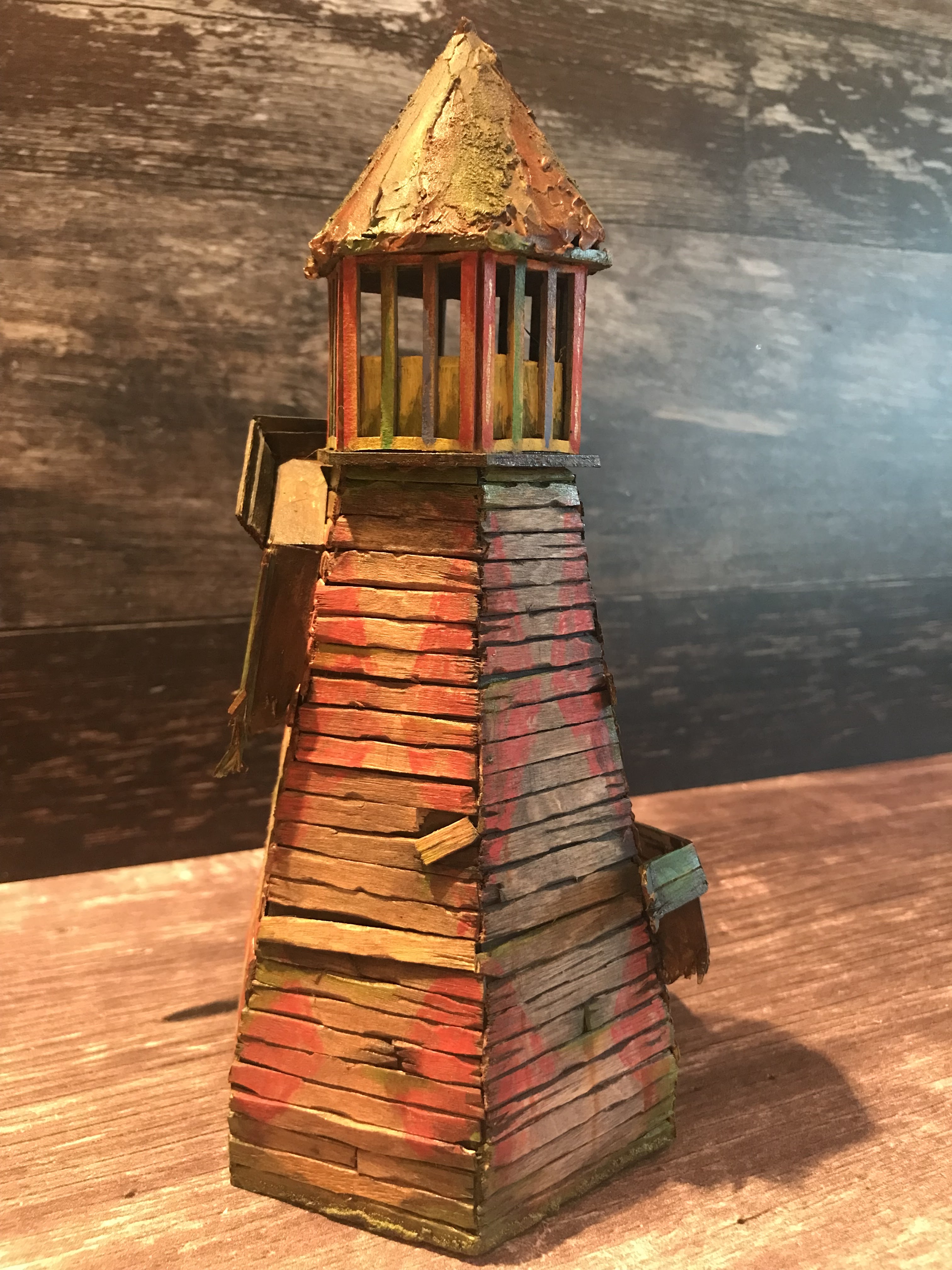
I’ve already made a lighthouse and a haunted windmill so this time I went for a derelict heater- skelter. 


Using the basic hexagon tower I decided that rickety old fairground rides would need to be built with boards, so my collection of coffee stirrers got put to good use.


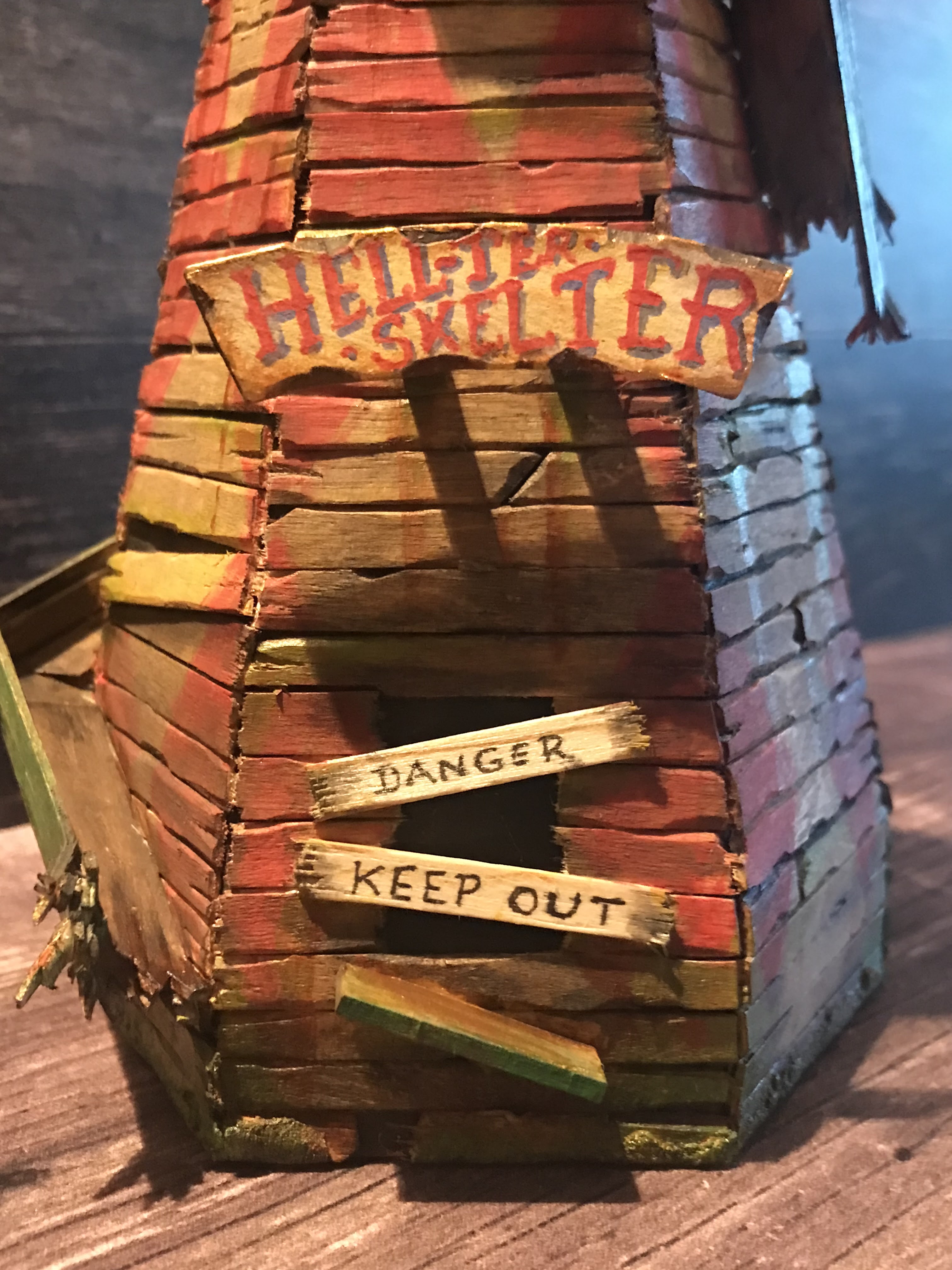
Rather than cut the ends neatly I measured and snapped the stirrers. To make the planks look even older and more decayed. I used a sharp craft knife (being very careful, of course) and took a few chunks out of the edges. To vary the design I made some joints and some missing and loose planks. 


This was a long job and took maybe 150 planks from around 50 stirrers. I used PVA to stick them to the tower.


The top of the helter-skelter is make from Tando Creative birdcage shapes I had lurking. I cut out the centre cage bars and trimmed the top and bottom to be straight. I stuck five of them together using small hexagons as a former. The roof is made of thin card, curved to make a cone shape.


The broken slide sections are cut from Tando greyboard offcuts, with coffee stirrer sides.


I used DecoArt Modelling paste to add texture to the rotting roof. When dry it was painted black, before adding the other colours.


I painted the red diamond shapes on the tower with a diluted Santa Red, to give the patchy, peely look. The sides of the slide are in Forest Green, with Burnt Umber for the slides. The sides were aged with diluted washes of Burnt Umber and Lamp Black.


To add the mouldy, stained look I used DecoArt Media Fluid Acrylics; Quinacridone Red, Paynes Grey, Transparent Yellow Iron Oxide, and Green Gold.


All finished with a distressed ‘Hell-ter Skelter’ sign.


Thanks for visiting. What would you build from Tando's hexagons?


Tuesday, 1 November 2022

Hex Tower - New Technique - by Kim

 Do you remember the Lighthouse and the Spooky Windmill that I posted a while ago? Well I've been
thinking about the technique, and how to build the hexagon tower more easily. So I've come up with this method. Don't be put off by your first read through - it is easier than it looks.

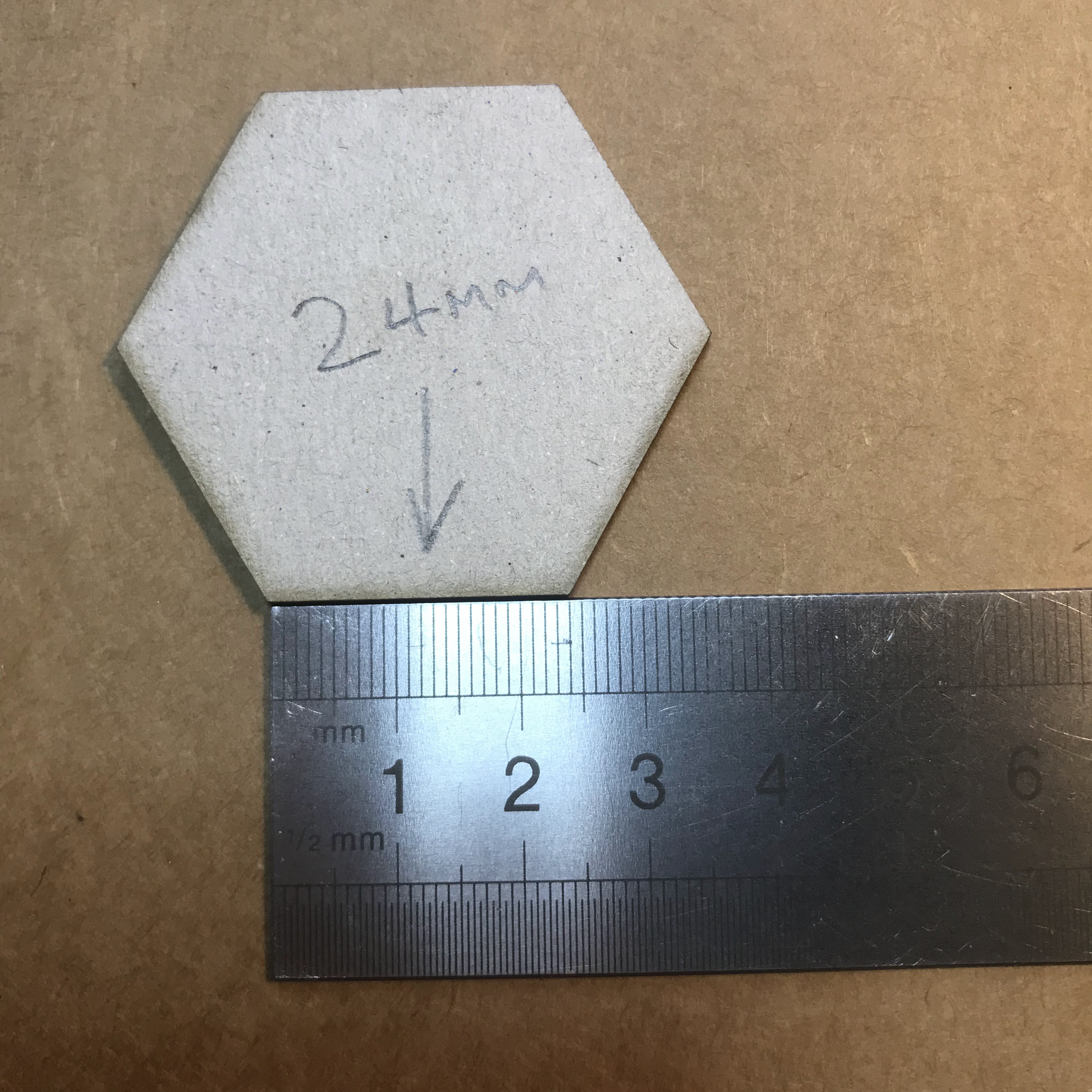
I used the smallest hexagon, 24mm sides, and the largest hexagon, 50mm sides.

A ruler, sharp craft knife, and fast drying glue (PVA will do, but you may have to wait longer for it to set)


CUTTING

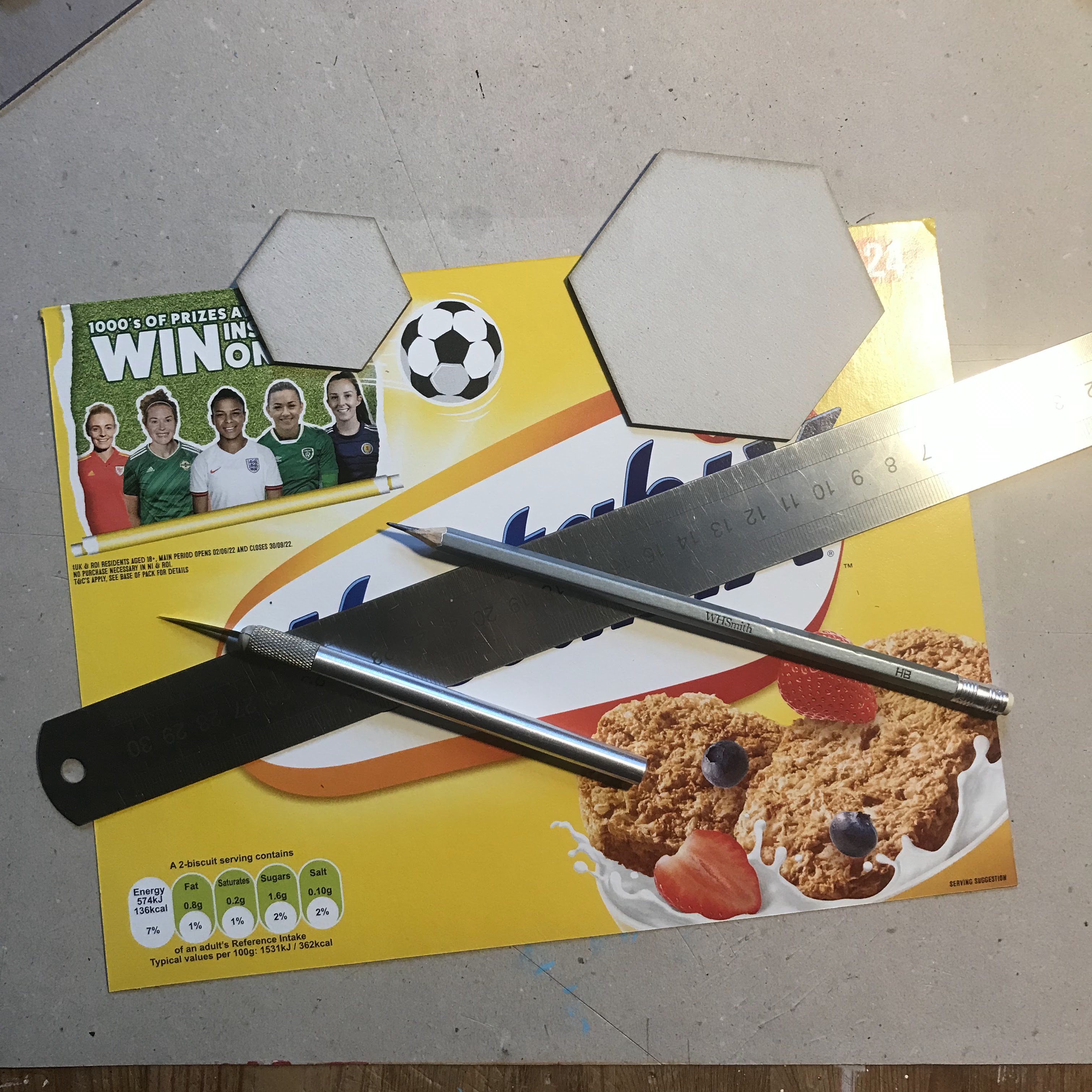
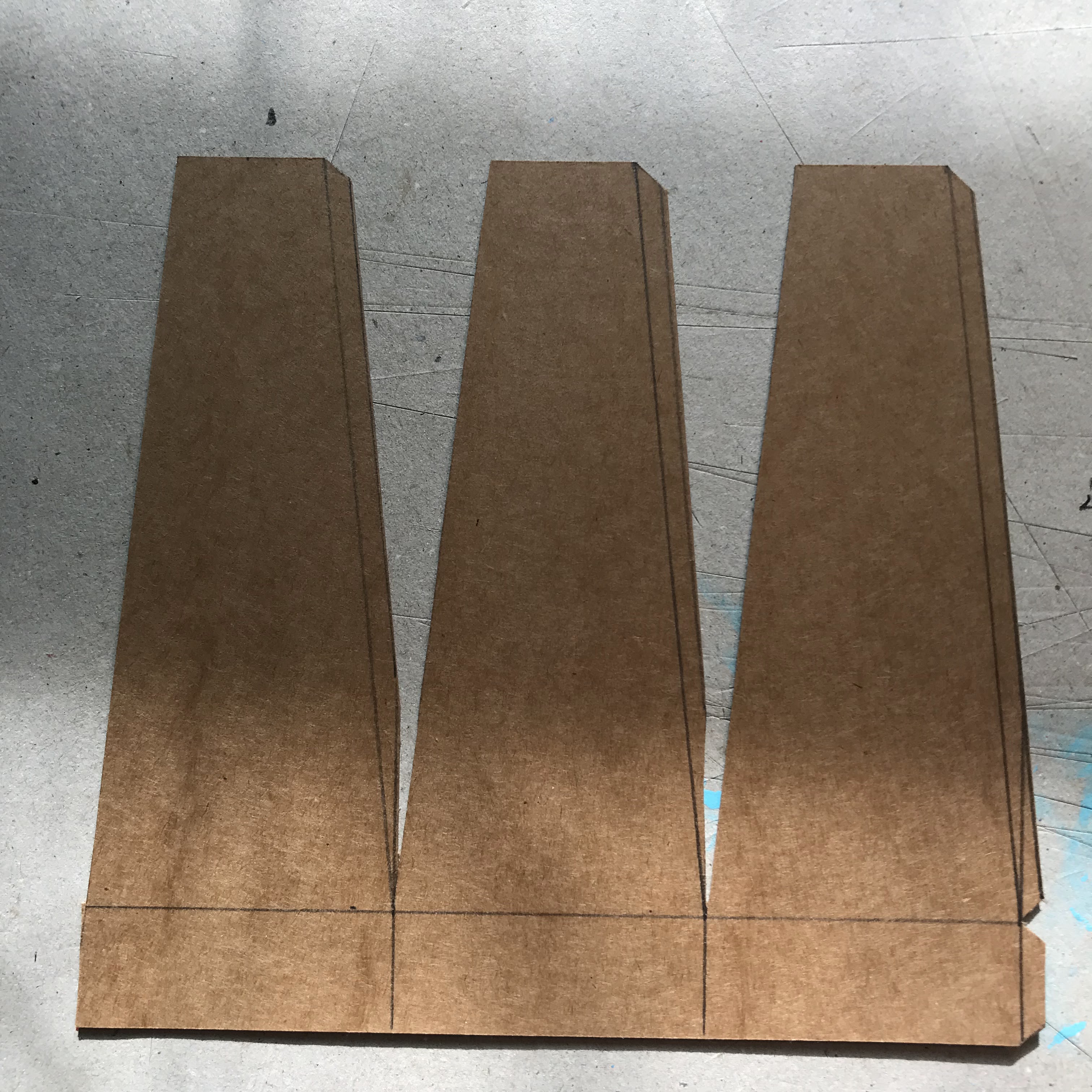
1    From a cereal box cut out the two big sides. Nice straight edges, please!

2    From the long edge measure 2cm and 14cm and draw lines across

3    From the left edge draw vertical lines at 5cm, 10cm, and 15cm

4    From the left edge mark the top centre of each of the panels created above - 2.5cm, 7.5cm, 12.5cm

5    Either side of the centre marks, mark 1.2cm. 

6    In each panel draw a line from the end of the 2cm line created at #2 to the corresponding point created at #5. 

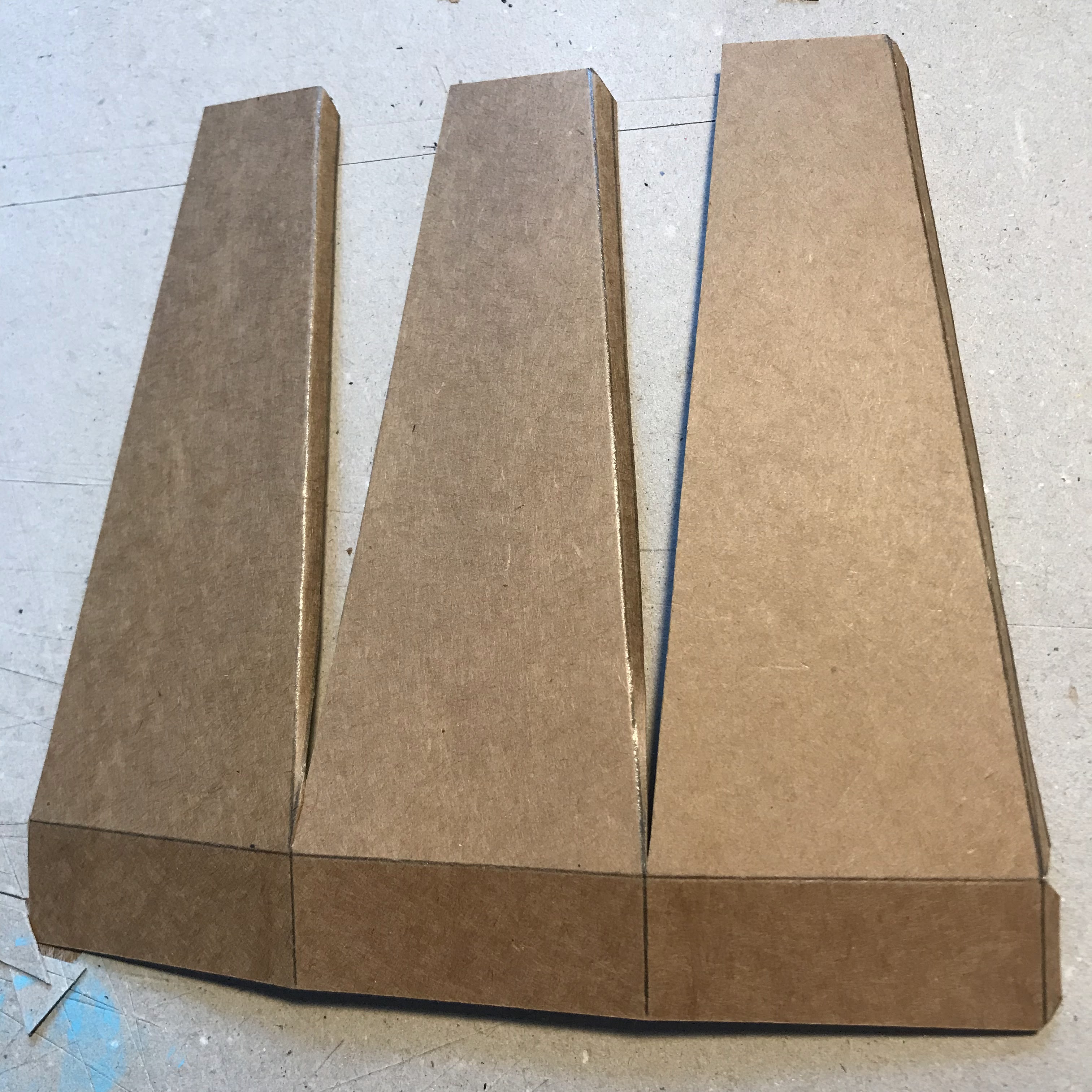
7    To the right of each tapered shape draw tabs for glueing - see photo for size and position.

8    Use the craft knife and ruler to cut out the shapes - make sure you include the glue tabs - see photos for required shape.


9    Repeat all the above for a second set of three sides.

10    Use an embossing tool/dotter with a ruler to put creases along the remaining pencil lines to help you fold the pieces into shape.


CONSTRUCTION

Check photos for positions

11    Start with the large hexagon (50mm) and one of the prepared side pieces. Apply glue just below the horizontal crease at the 2cm line, across all three panels. Place the edge of the large hex in centre panel and bring up the sides to match. Let it dry.

12    Apply glue to the tabs on the long sides. You may wish to do one at a time. Bring the tabs inside the adjacent edge and and adjust to make a tidy join. When both are done, let it dry.

13    Take the small hexagon (24mm). Apply glue around the inside of the top of the tower and place the small hex in to fit nicely level with the top of the panels. Let it dry.


14    Take the second side piece, apply glue to the tabs on the two inner long side (one at a time if you prefer) and form the tapered shape. You will not be able to get to these tabs once it is joined to the other half. Let it dry.


15    On your first half, apply glue to two edges of both the small and the large hex, and just along the inside of the long edge without tabs. Place the second 
half in position on top of the first, tucking the tabs inside to make contact with the glue. This is a but fiddly. Hold in place until dry.


16    Apply glue to the remaining edges of the hexs and the last tabs. Put the last panel in place, make any small adjustments before the glue sets. Let it dry.


17    To add strength to the bottom of the tower I used the largest hex ring - same size as the plain hex. I cut a small piece from the ring to allow it to fit and to be adjusted. I found it easier to slide the ring into the space at the bottom of the tower, making sure it fitted snugly, push it in too far, then apply glue around the inner edge and slide the ring out to meet it. Let it dry.


18    Make a brew and sit back and admire your handy work.

Once you have your raw tower it can be decorated however you wish. The Lighthouse was painted with DecoArt acrylics, the Spooky Windmill had Texture Sand and Modelling paste applied. You can cut holes for windows, install battery powered lights for special effects - you are limited only by your imagination. 

I have an idea for another hex project ...

Thank you for reading down this far. I hope you get to make a tower - remember you can adjust the measurements to suit your creation - and send photos so we can see how you get on!

Watch the YouTube video, too!


Tuesday, 28 June 2022

Hex Tex Tuesday- Abstract Wall Art- Fiona Randall


Welcome back for another Hex Tex Tuesday.

I love abstract art so decided to create a simple wall panel using the hexagons in a Monochromatic style.


I cut a Panel measuring 8x8ins from a Tando Grey Board Sheet and gave it a coat of DecoArt Chalky Finish in Carbon to both sides of the panel. Once dry I gave both sides of the panel a coat of DecoArt Ultra Matte varnish to seal and protect the chalky finish.
For this project I used 7 of the  hexagons . 

I gave all the hexagons a coat of DecoArt Media Tinting  base and dried with a heat tool.
Once dry I stamped all the hexagons with textures from Chocolate Baroque's Harlequin Fragments Rubber Stamp Set with Black Archival Ink.
I cut one of the hexagons as shown in the diagram below.


I drew a line from corner to corner left to right and then right to left.
As you will see you end up with a cross and have two diamond and two triangle shapes.
Cut along the cross lines with a ruler and a craft knife.

Next up arrange your hexagons onto the panel as shown.
To finish add a sentiment strip if desired.
I chose to go with a Monochromatic theme but this would look just as good using a riot of colour. The possibilities are endless.
A quick and easy project that would look great on any wall in your home or studio.
Thanks for taking the time to stop by and read
Fiona.

PRODUCTS USED.


Tuesday, 21 June 2022

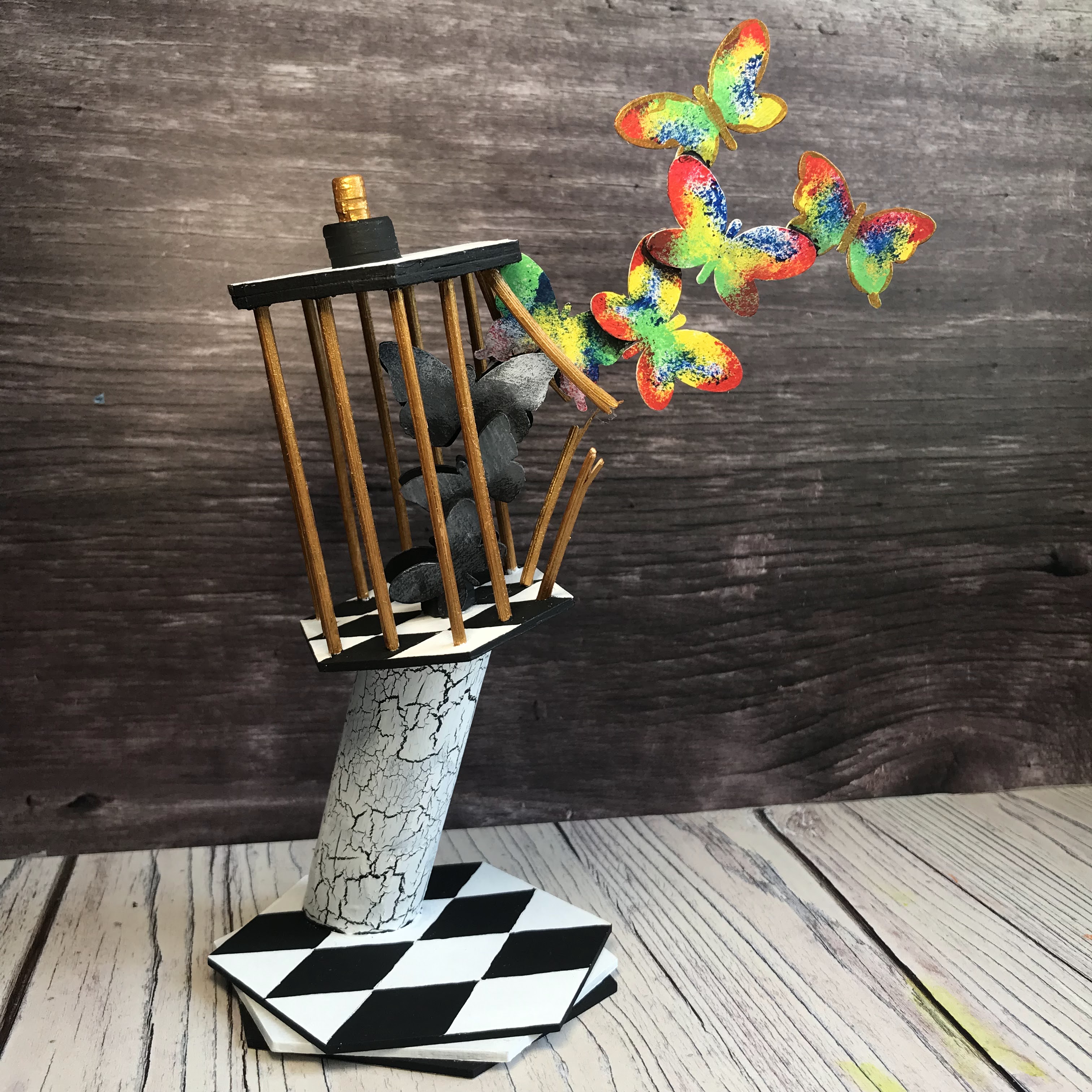
Hex Tech Tuesday - Freedom by Kim

 I'm trying something a bit abstract this time. I hope you like it.

"Freedom!"


From the Tando Creative Hexagon set I used 3 x 3.5mm hexs, and 3 x 5mm hexs (that's length of the sides)

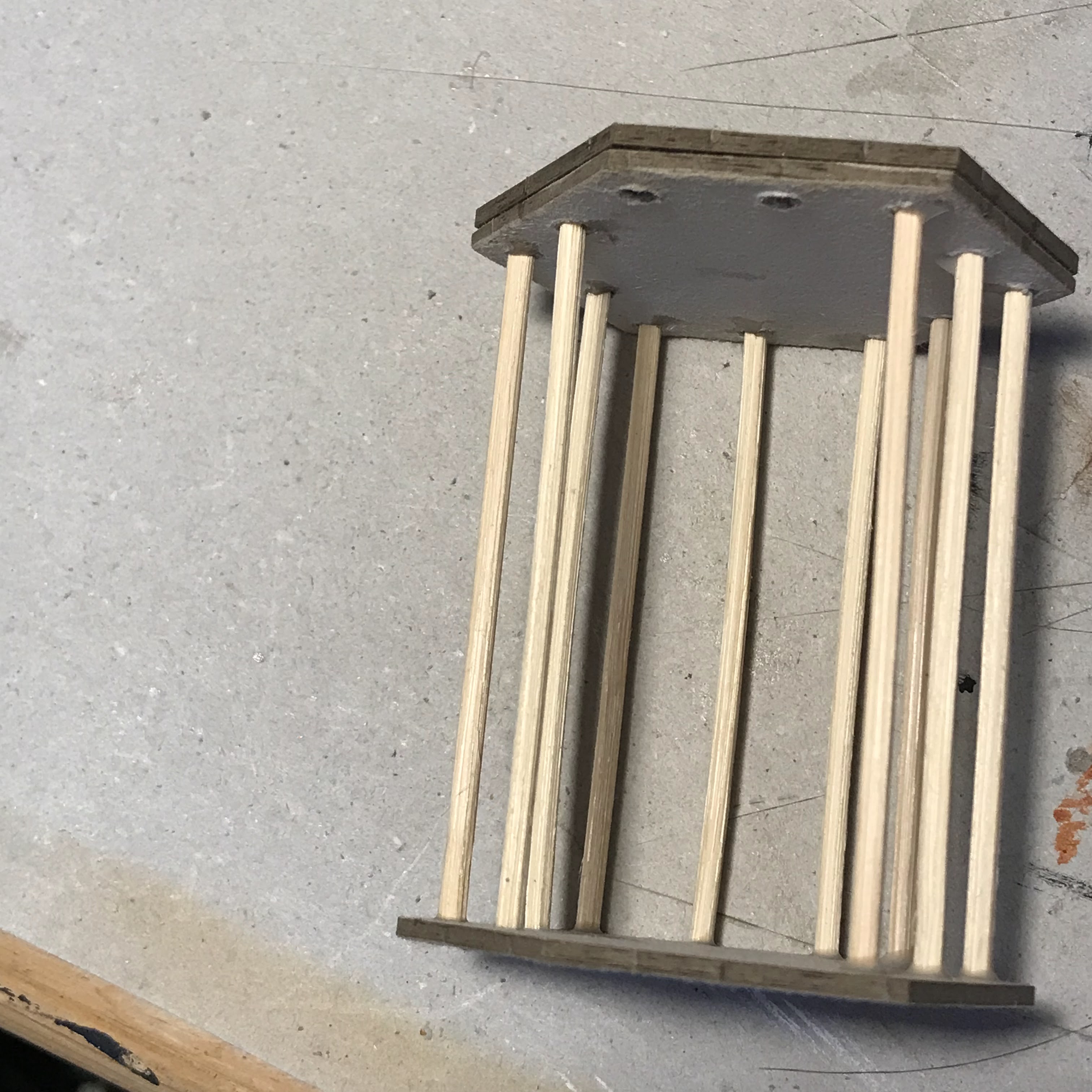
I started with the cage. For the bars I used clean bamboo sticks from a room infuser (the thing that has smelly oil in the bottom and sticks poking out to make the room smell nice). I drilled holes (as shown) in two of the 3.5mm hexs to take the bamboo sticks. The sticks were a bit too long so I cut them to 8cm. Before I glued them in I bent and broke two of them to allow the butterflies to escape.

Next stage was to glue the remaining ten sticks in place. I put them all in one hex then lined up the second hex to complete the cage. I glued the third 3.5mm hex on the top to cover the drill holes. I added some washers and rivets left over from Tando's Industrial Elements kit to decorate the top of the cage.

The stand is made from a piece of cardboard tube cut from a cooking foil roll. I wanted the whole thing to be skew-if, so I cut the bottom at an angle, and the top at an angle but not matching the bottom angle (see picture). I stuck the cut piece on a large hex. All was set aside to dry while I arranged the butterflies.

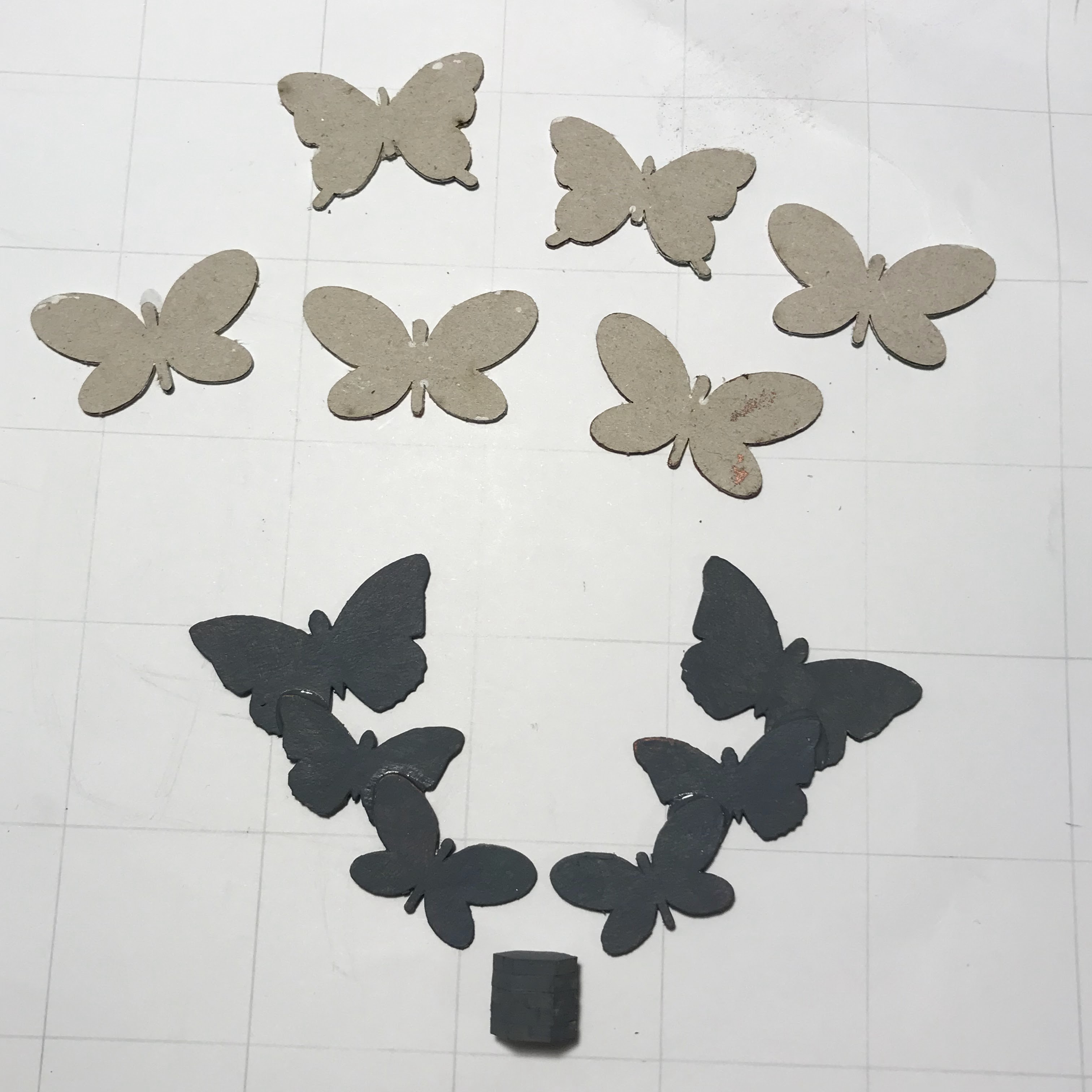
I took 11 butterflies from a set of Tando Mini Butterflies. I used six, three matching pairs, attached to a pile of four washers from Industrial Elements, to make a firm base section. The remaining butterflies were arranged as if flying out of the cage, their wing tips were glued together with PVA.


Before I assembled the sections I painted them. I used black and white for everything except the cage bars and escaping butterflies.

The cage floor was painted with a harlequin diamond shape, as was the top hex base. I feel there is something sinister about the design. The two remaining large hexs are painted one black, and one white.


The tube support for the cage was painted Lamp Black. When dry a coat of DecoArt Weathered Wood was applied and allowed to dry. White was painted over that to give the lovely crackle finish.

The cage bars are painted with Venetian Gold. The escaping butterflies are stippled with bright colours - I used yellow, green, red and blue, with the top two having gold edges to their wings. The three pairs of butterflies not escaping from the cage are painted black, with Zinc (grey) and white lightly dry brushed on to add texture.

Assembly (not the sort we had at the start of our school day!)

Glue the two large hexs under the base section. Make each one twisted slightly out of alignment, black on the bottom, white next.

Glue the dark and coloured butterfly sections together at the wings, making sure they fit nicely in the cage. When they are dry glue them in the opening of the cage. I added a bit of support by glueing the wing to the top of the cage. Allow to dry.

The broken cage bars can now be added, arranged to look like they have burst open. It is a bit fiddly and you will need to support each bit until the glue has set - might be worth using a solvent, quick drying glue here.


Last is to glue the cage to the stand, sit back and admire your handiwork!

I hope you enjoyed this Hex Tech. Thanks for stopping by!

Product:

Tando Creative Hexagons

Tando Creative Mini Butterflies

Bamboo sticks, or similar

DecoArt Americana Colours

DecoArt Weathered Wood